


Chemistry for Fostering Climate Neutrality and Resilience through Agriculture: Sustainable valorization of natural and agricultural resources to enhance climate neutrality
Authors: IRINA FIERASCU, ZINA VULUGA, DENIS PANAITESCU, CRISTINA ENASCUTA, NICOLETA RADU, RADU CLAUDIU FIERASCU
School: National Institute for Research & Development in Chemistry and Petrochemistry - ICECHIM
Country: ROMANIA
e-mail: fierascu.radu@icechim.ro
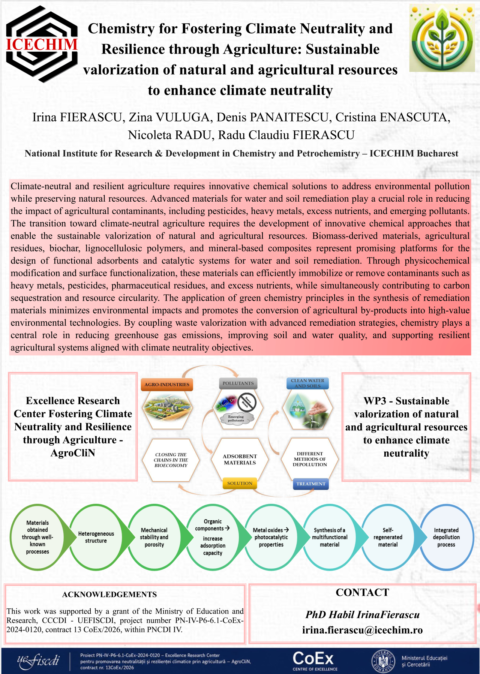
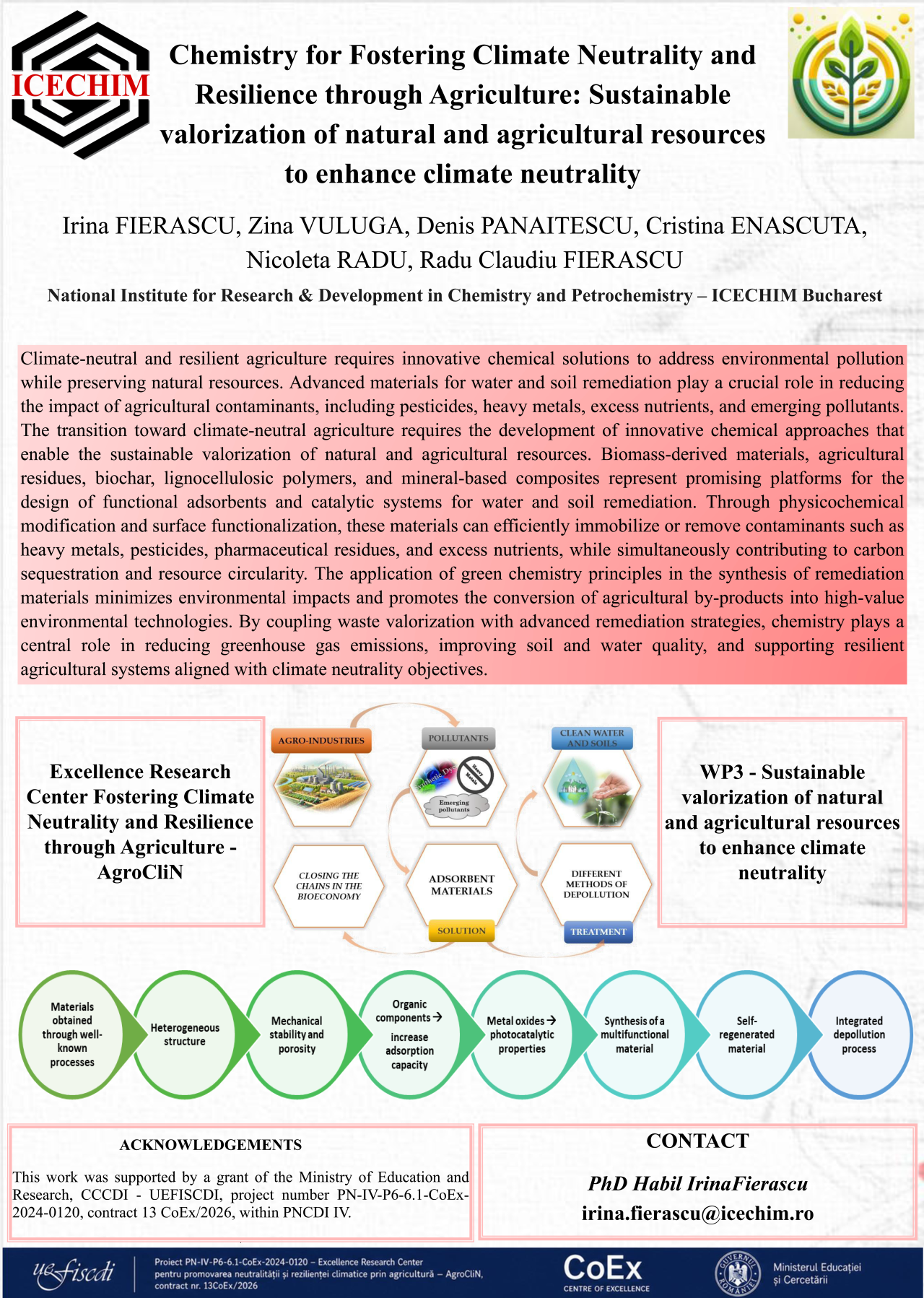
Climate-neutral and resilient agriculture requires innovative chemical solutions to address environmental pollution while preserving natural resources. Advanced materials for water and soil remediation play a crucial role in reducing the impact of agricultural contaminants, including pesticides, heavy metals, excess nutrients, and emerging pollutants. The transition toward climate-neutral agriculture requires the development of innovative chemical approaches that enable the sustainable valorization of natural and agricultural resources. Biomass-derived materials, agricultural residues, biochar, lignocellulosic polymers, and mineral-based composites represent promising platforms for the design of functional adsorbents and catalytic systems for water and soil remediation. Through physicochemical modification and surface functionalization, these materials can efficiently immobilize or remove contaminants such as heavy metals, pesticides, pharmaceutical residues, and excess nutrients, while simultaneously contributing to carbon sequestration and resource circularity. The application of green chemistry principles in the synthesis of remediation materials minimizes environmental impacts and promotes the conversion of agricultural by-products into high-value environmental technologies. By coupling waste valorization with advanced remediation strategies, chemistry plays a central role in reducing greenhouse gas emissions, improving soil and water quality, and supporting resilient agricultural systems aligned with climate neutrality objectives. This work was supported by the Ministry of Education and Research, CCCDI – UEFISCDI, project number PN-IV-P6-6.1-CoEx-2024-0120, contract 13 CoEx/2026, within PNCDI IV.

