




SmartKegel
Author: CHIEN NAI-HUI; FAN YU-AN; SHIH SHU-HAN; HO TSAI-ER; CHEN JING-YI
Company/Institution: Chang Gung University Of Science and Technology (Department of Nursing); National Chushan Senior High School, Taiwan
Country: TAIWAN
e-mail: eddie@wiipa.org.tw
web: https://www.tippa.org.tw/
Urinary incontinence (UI) is a prevalent health condition that significantly affects physical well-being and quality of life. Globally, around 20% of adults are affected, with prevalence among older women reaching 50–70%. Beyond physical inconvenience, UI often leads to anxiety, depression, social isolation, and reduced self-confidence, creating a substantial burden on daily life. Effective intervention strategies are therefore urgently needed.
Pelvic floor muscle training (PFMT), such as Kegel exercises, is widely recommended as a non-pharmacological treatment. However, verbal instruction alone cannot ensure correct understanding or execution. Studies show that about 40% of patients fail to properly activate pelvic floor muscles and instead compensate with abdominal, gluteal, or thigh muscles, limiting training outcomes. Furthermore, since PFMT requires long-term adherence, many patients discontinue exercises in the absence of real-time feedback and motivational reinforcement, reducing overall effectiveness.
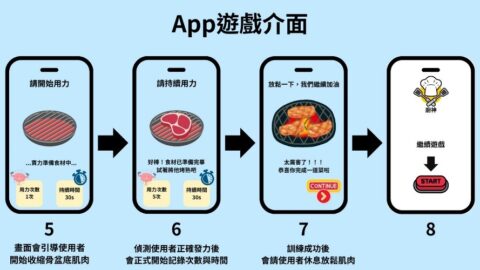
To address these challenges, our team developed the Smart Pelvic Trainer, an assistive device integrating artificial intelligence (AI), thin-film pressure sensors, and a mobile application. Its main functions include: (1) model-based guidance and visual assistance to ensure correct muscle contraction; (2) real-time feedback to provide instant corrective suggestions; (3) long-term training data recording and analysis to support personalized program adjustments; and (4) visualization and gamification to enhance motivation and adherence.
The Smart Pelvic Trainer ensures accurate pelvic floor muscle activation, thereby improving the precision and effectiveness of PFMT. It also supports healthcare professionals in clinical practice and patient education with greater efficiency. This innovation integrates health promotion, technological advancement, and educational value, offering substantial benefits for patients’ quality of life and healthcare outcomes. Moreover, it aligns with the United Nations Sustainable Development Goals (SDGs), particularly “Good Health and Well-being” (SDG 3) and “Industry, Innovation, and Infrastructure” (SDG 9).

