


EEHV Florescence Assay: Rapid Kit for Elephant Herpes Virus Detection
Authors: WUTTIKORN WATCHARAPIMONPAN, PIYASAK CHAUMPLUK
School: Triamudom Suksa School, Department of Botany, Faculty of Science, Chulalongkorn University
Country: THAILAND
e-mail: aramwit@gmail.com
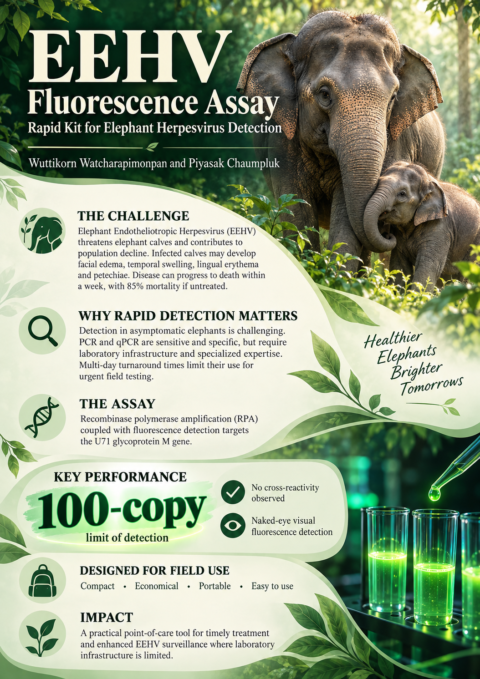
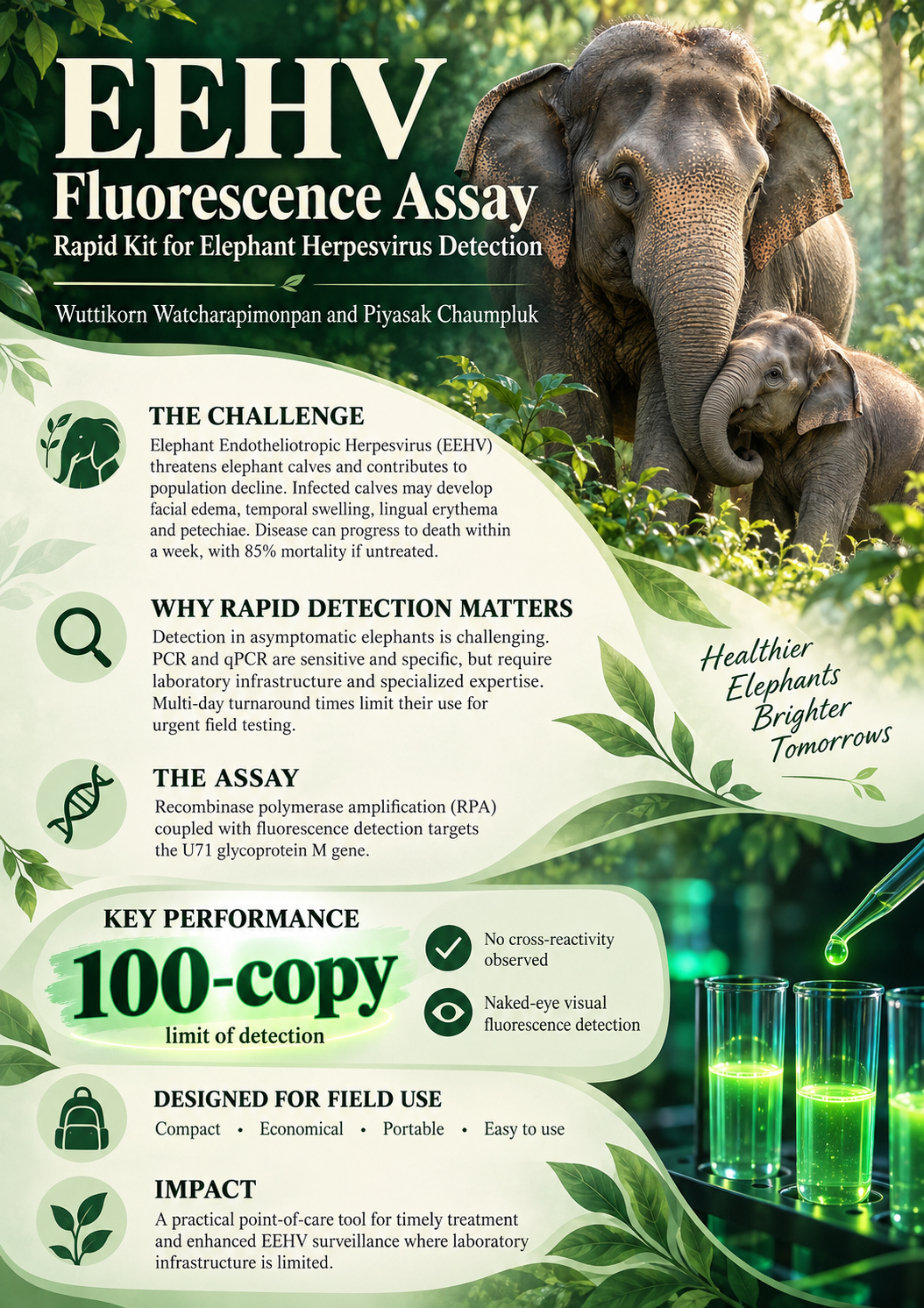
Elephants are an ecologically significant and endangered species, with calf mortalities from Elephant Endotheliotropic Herpesvirus (EEHV) substantially driving population decline. Infected calves present with facial edema, temporal swelling, lingual erythema, and petechiae, progressing to death within a week with 85% mortality if untreated. Viral detection in asymptomatic elephants is difficult because the herpesvirus cannot be cultured. Although PCR and qPCR are sensitive and specific, they require laboratory infrastructure and specialized expertise, with multi-day turnaround times impractical for field testing with urgent results needed. To address this, an assay kit was developed using recombinase polymerase amplification (RPA) coupled with fluorescence detection. Targeting the U71 glycoprotein M gene, it shows no cross-reactivity, achieves a 100-copy limit of detection, and enables naked-eye visual fluorescence detection. Compact, economical, portable, and easy-to-use, this kit facilitates point-of-care testing of laboratory-standard quality, offering a practical frontline tool for timely treatment and enhanced disease surveillance with constrained infrastructure.

