





Dual cathode pulse oscillator
Authors: IZAK BRNADIĆ
School: Vladimir Prelog Science School
Country: CROATIA
e-mail: Izak.brnadic@gmail.com
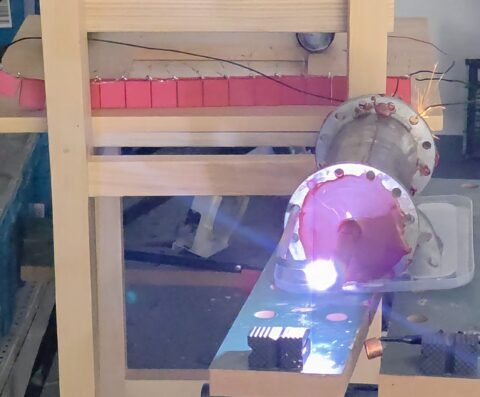
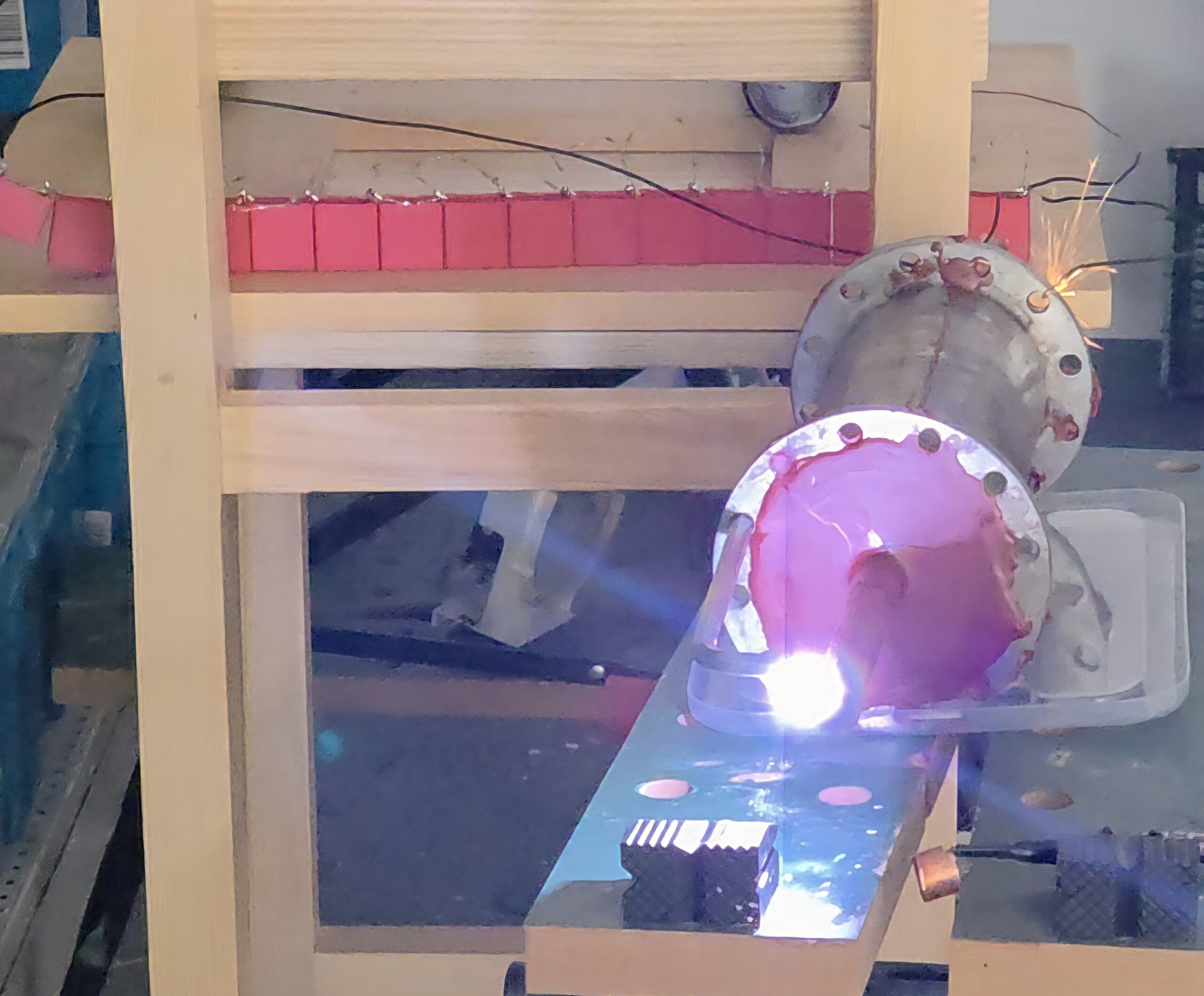
The dual-cathode pulse oscillator employs a low-impedance capacitor bank and a pulse-forming line with a composite insulator, enabling the generation of an extremely short, rectangular high-voltage pulse. This pulse accelerates electrons to relativistic speeds across the gap between the first (physical) cathode and the anode; the anode further amplifies the effect through secondary emission, thereby creating an electron cloud. The electron cloud passes through the transparent anode and continues moving under its own inertia, subsequently forming a second—so-called virtual—cathode and exceeding the space-charge limit. Consequently, wide-spectrum radio waves spanning various frequencies and modes are generated. Accordingly, this innovation has a wide range of applications—from plasma physics research to testing electrical components, machinery, and systems for interference susceptibility (e.g., satellites, avionics, radar, transmitters, etc.).

